


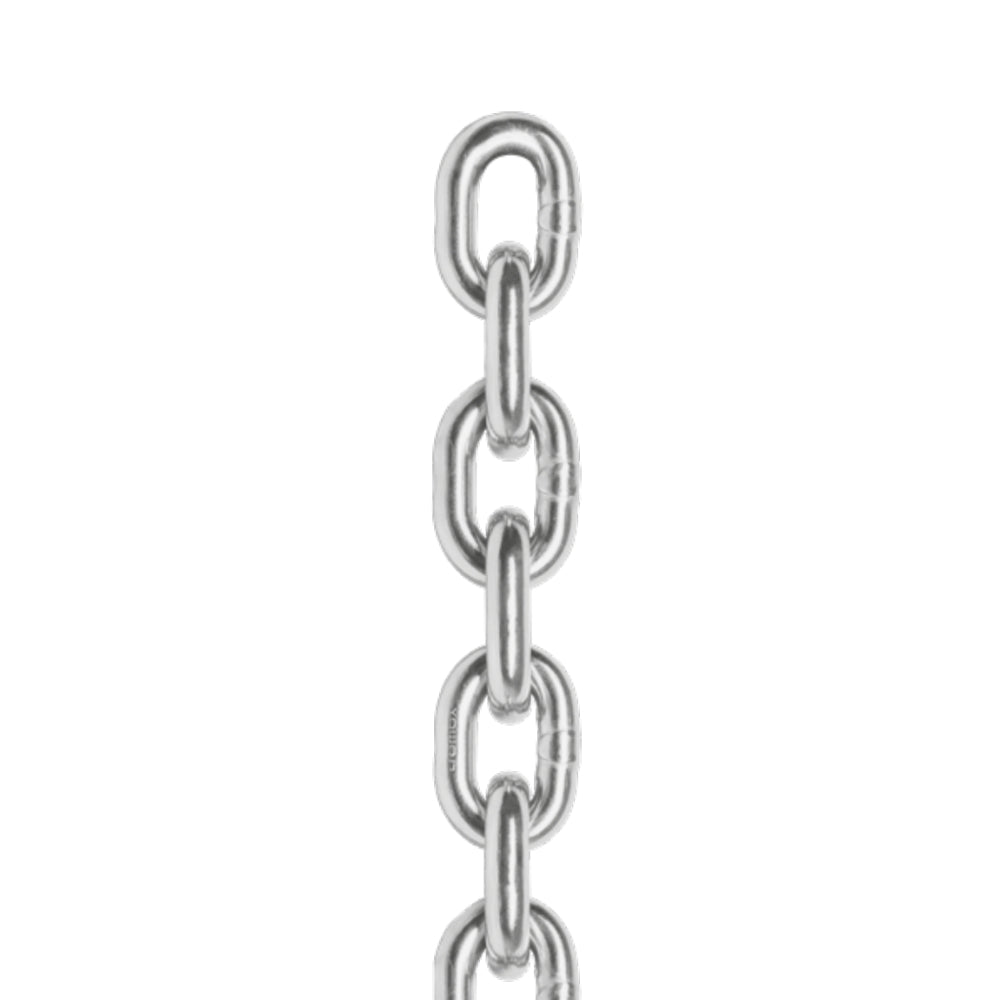
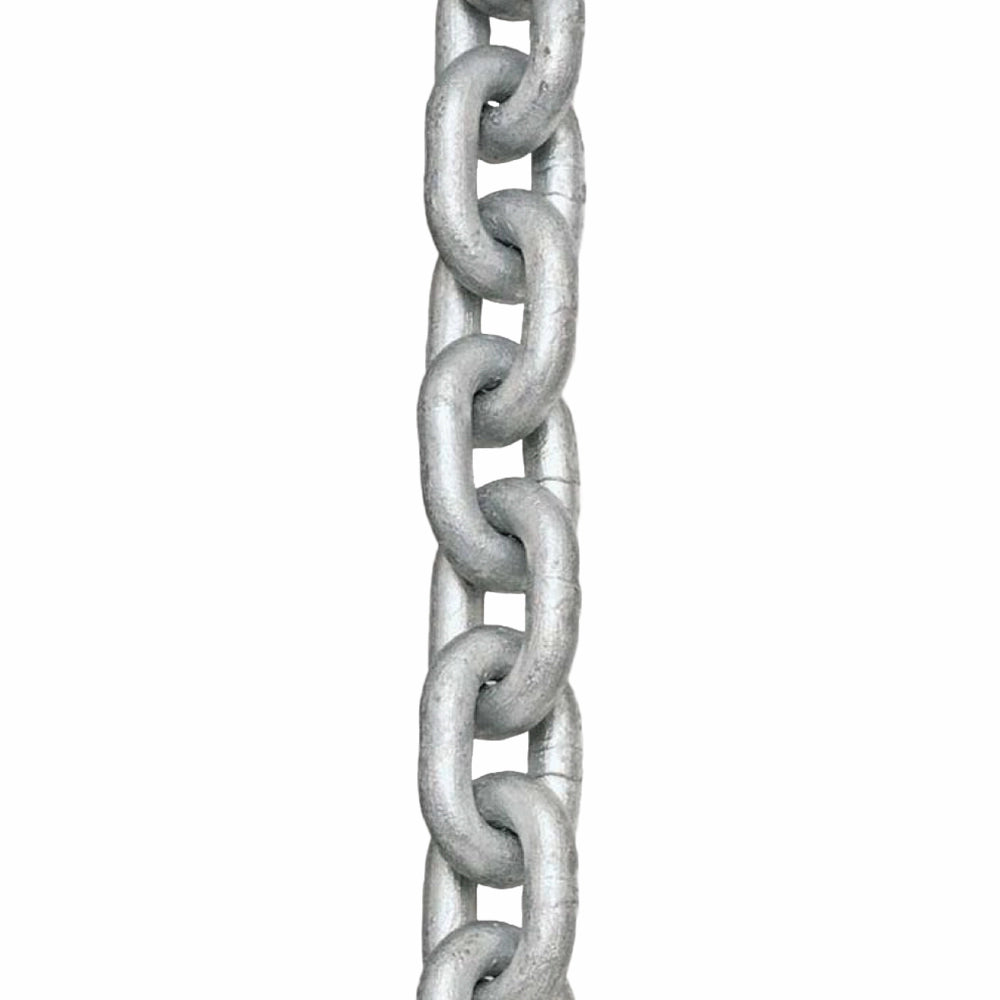


We are experts in chain for lifting - also in places you don't want to expose your worst enemy to:
At Fyns Kran Udstyr we are specialists in all types of chain for lifting tasks, also when it comes to lifting in 'hard environments' such as sewers, at water works and similar environments. We have put together this page to show some of the many advantages of the resistant products for harsh environments
What is the difference between Grade 8, 10, and 12 lifting chains?
When choosing a lifting chain, you will often come across the designations Class 8, Class 10, and Class 12 (also known as Grade 80, 100, and 120). These grades indicate the strength and quality of the steel.
Class 8 (Grade 80): The traditional and most widely used standard for lifting chains. It is robust, reliable, and suitable for most common lifting tasks in industry.
Grade 10 (Grade 100): Provides approximately 25% higher working load limit (WLL) than Grade 8 for the same chain size. This means you can choose a thinner and thus lighter chain for the same lift, which significantly improves ergonomics for the operator.
Grade 12 (Grade 120): The strongest chain type on the market, offering up to 50% higher lifting capacity than Grade 8. It is ideal for extremely heavy lifts where reducing the weight of the lifting equipment itself is critical. Pewag is one of the leading manufacturers of Grade 12 lifting chains.
Regardless of which grade you choose, a lifting chain must always be equipped with an identification tag (chain tag) that specifies the WLL, chain size, steel grade, manufacturer, and a unique traceability number.
Choose the Right Lifting Chain for Your Application
Choosing the right lifting chain is about more than just capacity—it’s about matching the chain’s properties to the specific requirements your application places on strength, durability, and the work environment. An incorrectly selected lifting chain can, at best, result in unnecessary wear and, at worst, pose a serious safety risk. Always start by determining the maximum load weight you need to lift, and then select a lifting chain with a WLL (Working Load Limit) that covers this weight as a minimum. Remember that the WLL is always specified for straight pull in a single leg—if you are lifting with multiple legs at an angle, the effective capacity is reduced, and you must calculate the load based on the angle factor.
Next, you should consider the chain class. A Class 8 chain is the classic and most widely used standard, covering the vast majority of lifting tasks in industry. If you need to reduce the weight of the lifting equipment itself—for example, because your employees handle the chains manually many times a day—a Grade 10 chain gives you approximately 25% higher capacity for the same dimensions, allowing you to choose a thinner and lighter chain.
For the heaviest-duty applications, where every kilogram counts, Class 12 chains offer up to 50% more capacity than Class 8. The working environment also plays a crucial role. If the chain is to be used in corrosive environments such as sewers, water treatment plants, offshore, or the food industry, you should choose a stainless steel (AISI 316) lifting chain that resists chemicals and saltwater without losing strength. For high-temperature applications—such as in forges or foundries—specialized chains are available that have been tested and approved for use at elevated temperatures.
Finally, ensure that the chain is properly marked with a chain tag indicating the manufacturer, chain class, dimensions, WLL, and a unique traceability number. This marking is not merely a legal requirement—it is your guarantee that the chain has been manufactured and tested in accordance with applicable European standards. If you are unsure which lifting chain is best suited for your application, our specialists are always ready to help you find the right solution at 70 15 20 15.
