

Nine important rules when using a Shackle
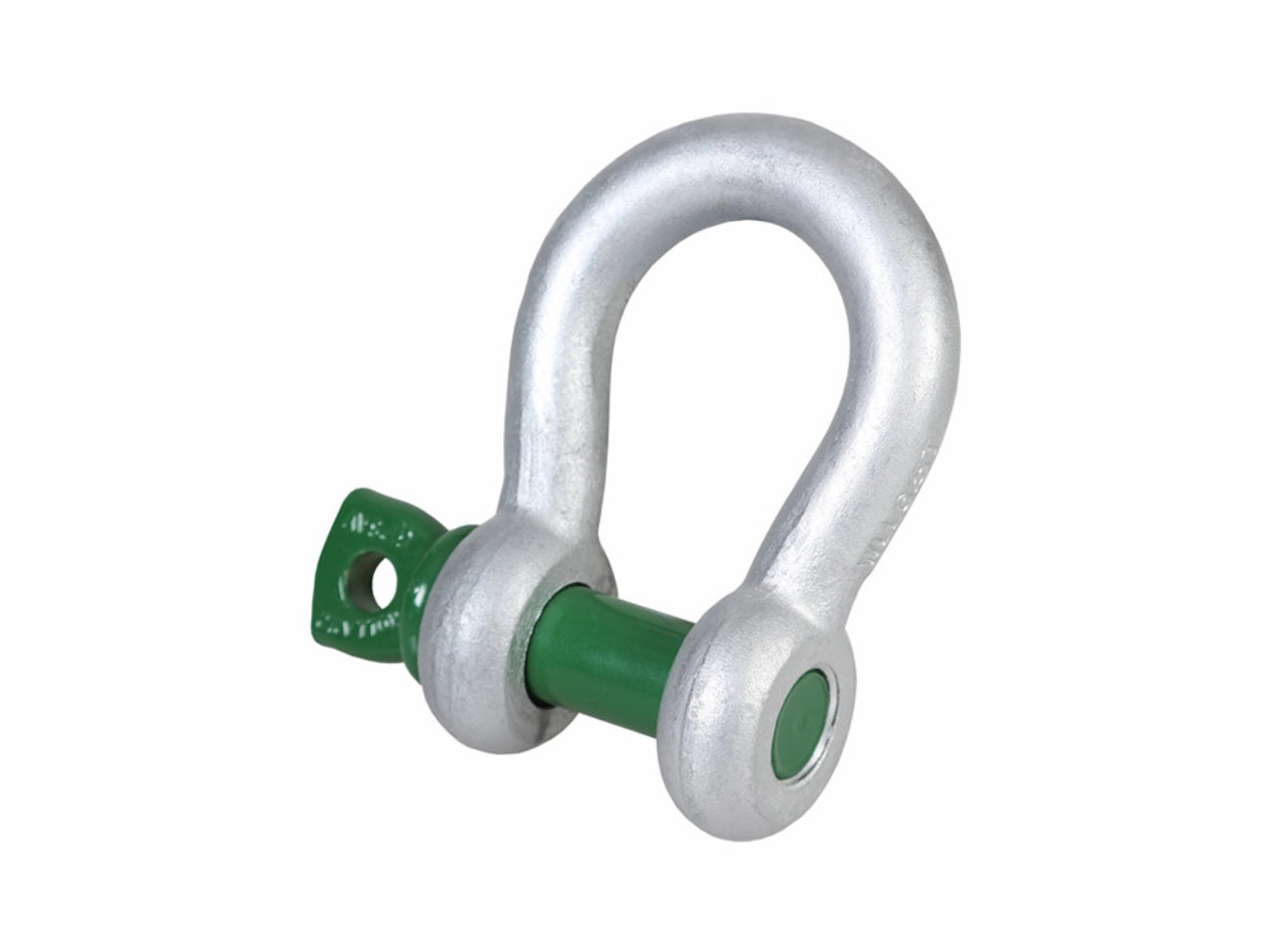
Shackles are used every day in a number of different anchoring tasks. Before using a shackle, there are nine important rules to remember:
RULE NO. 1
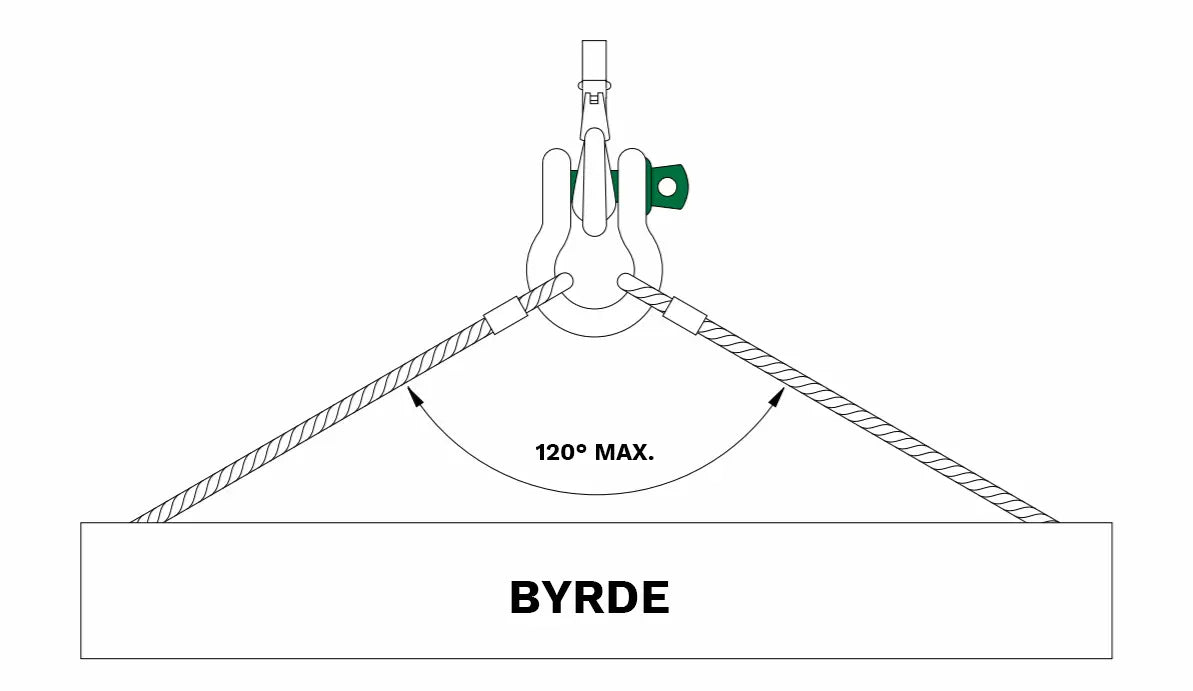
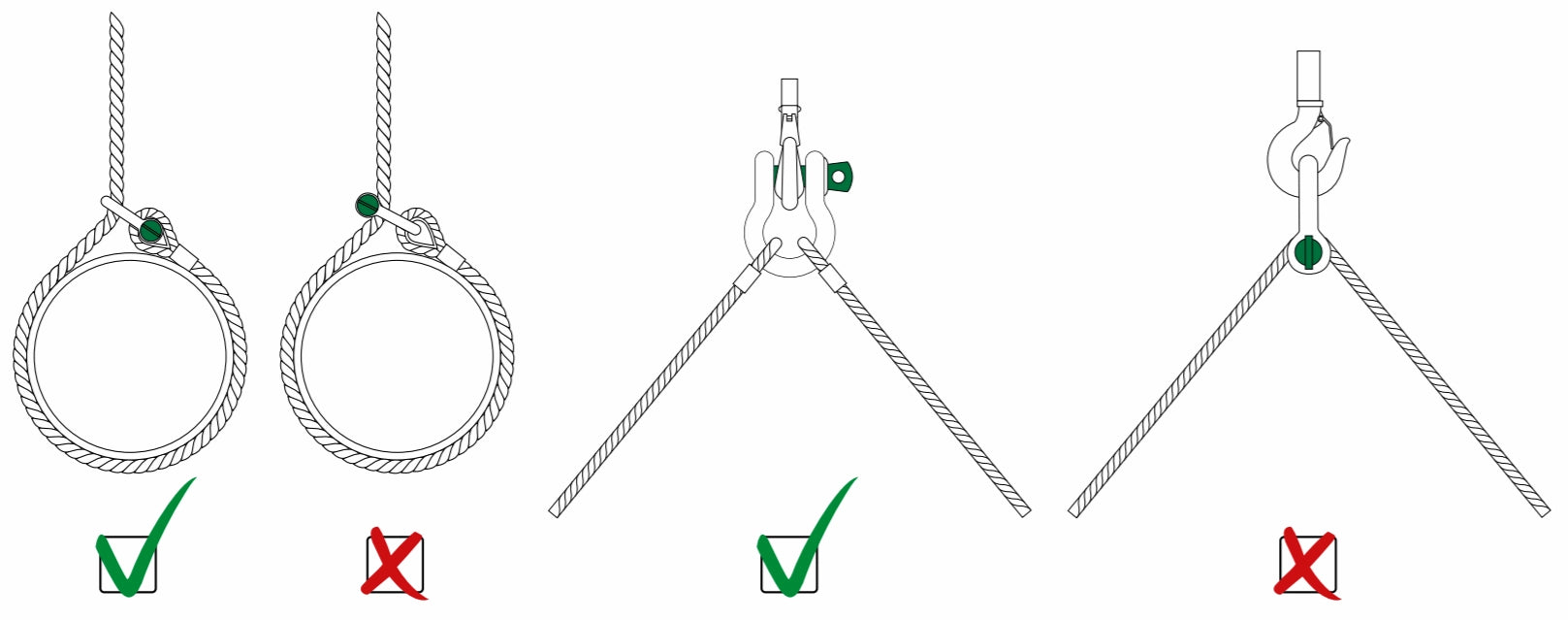
When you make a sling, consisting of, for example, several Round Slings, these are gathered in the bow of the shackle - not at the bolt, as it can damage and weaken the sling. The angle between your slings must NOT exceed 120°.
RULE NO. 2
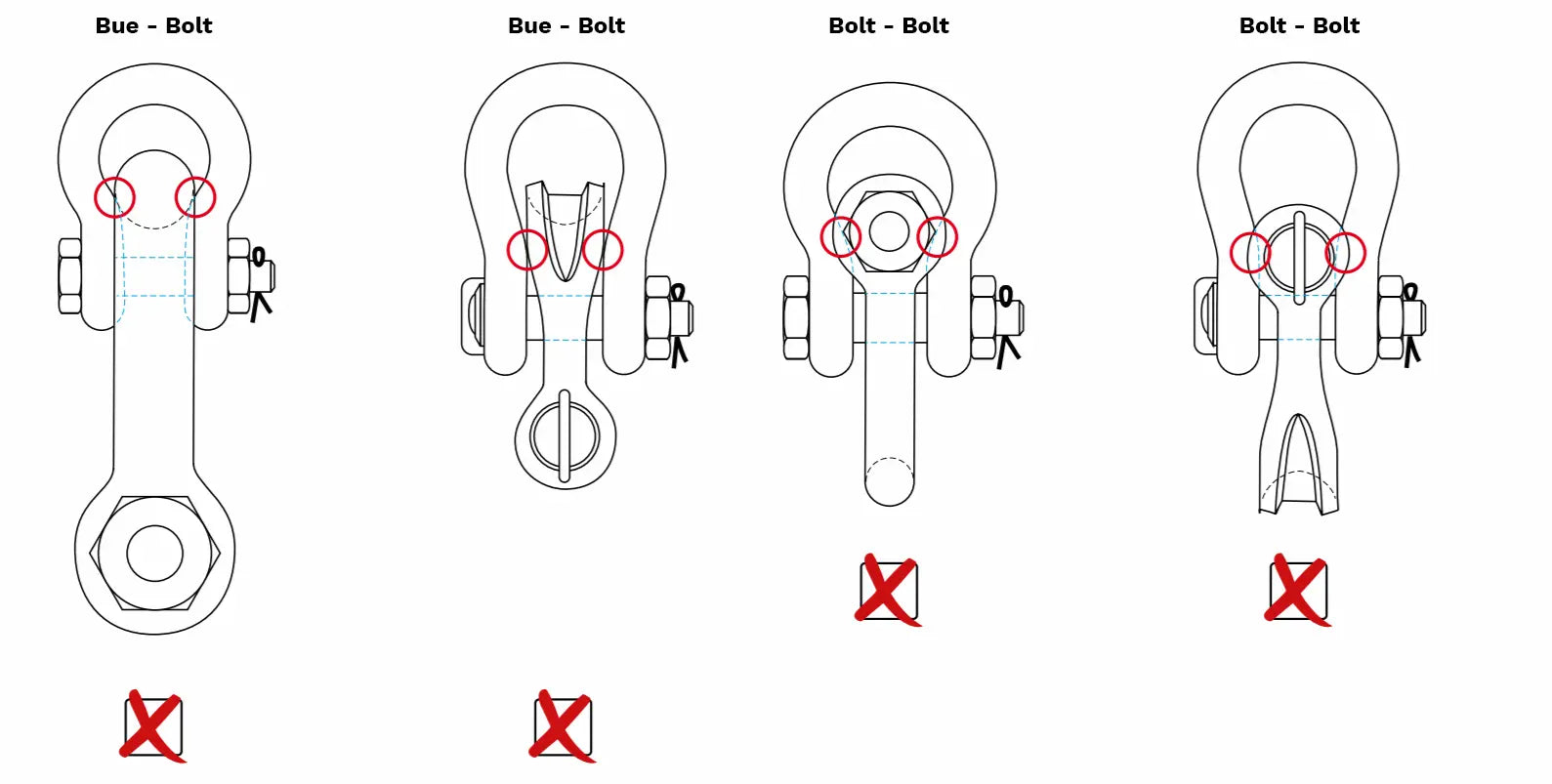
Shackles are used as removable links between lifting components such as steel wire, chains and other types of gear. Most types of Lifting Gear that can be attached to a shackle have a round attachment surface. When joining two shackles, either bow to bow, bow to bolt or bolt to bolt is permitted. BUT the component must have at least the same or larger diameter. The WLL of the configuration is limited to the component with the lowest WLL. An increased contact surface by using components with a larger diameter is recommended. Sharp edges must be avoided in every possible way. Bolt-to-bolt configurations where one shackle's bolt collides with the other shackle's 'body' should not be used, as this configuration means that the shackle does not carry the load. See illustration below. In bow-to-bolt configurations where the bow of one shackle abuts the 'body' of the opposite shackle should not be used either, as this configuration means that the shackle does not carry the load. See illustration below.
RULE NO. 3
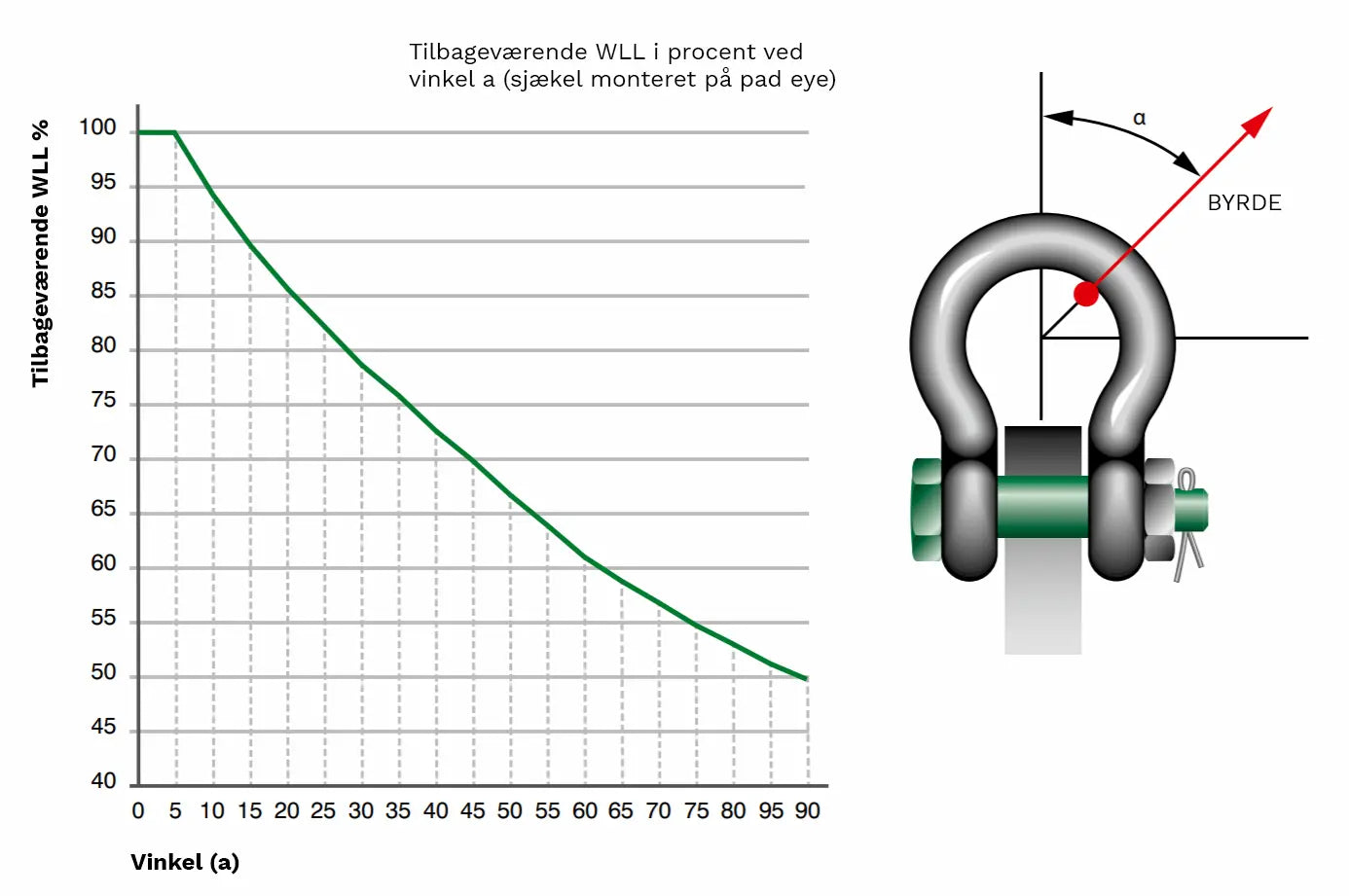
Avoid side loading D-shaped shackles. These shackles are rated and designed for equal tensile load. Therefore, the centerline of the load should be the same as the centerline of the shackle. Shackles type H with bolt or nut and split can be side loaded. Check load table for reduction of lifting capacity with this type of attachment. The graph below shows an example of side load loss of WLL and applies to almost all types of Green Pin shackles except the following models P-5363, P-5367, P-6033, P-6013, P-6043.
RULE NO. 4
When sensing a load, the curved end of the shackle must sit on the long side of the strap to prevent the bolt from loosening. Avoid that the load you lift moves on the bolt of the soul - this can in the worst case lead to its loosening. To avoid eccentric loading of the shackle, distance washers can be used on the bolt, for example. However, the width between the shackle's two 'jaws' or bolt holes must not be permanently reduced by, for example, welding the spacers on or by clamping the 'jaws' together, as this reduces the shackle's WLL, and it will be discarded at the next statutory inspection.
RULE NO. 5
When using a shackle in a wire rope, the shackle must be at least the same or larger in diameter than the diameter of the wire rope.
RULE NO. 6
When using a shackle together with polyester Round Sling ensure that the shackle is large enough to prevent the polyester fibers from being pinched together.
RULE NO. 7
Shackles should not be exposed to higher or lower temperatures, which can affect the strength of the shackle. (recommended -20 degrees to 200 degrees celcius).
RULE NO. 8
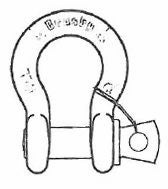
Always make sure that the bolt on the shackle is properly tightened. The thread must not be visible but must be screwed all the way down. (The bolt must be flush with the outside of the shackle or protrude slightly). The bolt head must fit into the shackle. Shackle with nut on bolt must be secured with a locking split.
RULE NO. 9
Use a shackle with a nut and split if the shackle is to be in place permanently. Shackles with bolts are used if the shackle must be removed after lifting. If a shackle with a bolt is to be in place for a longer period of time, it is important to tighten the bolt or tie it with a piece of wire from the eye to the shackle.
