

The complete guide to use Webbing Slings and Round Slings
As an additional service for shoppers on our webshop, we have offered a guide on Webbing Sling and Round Slings. We believe that the guide covers most things and it includes, among other things, around:
Starting advice when using Webbing Slings and Round Slings.
Characteristics of Round Sling
Characteristics of Webbing Slings
Load Tables
Application and user guide
Before use:
Recommended systems for polyester Round Slings (safety factor 7:1)
When is an edge too sharp to use polyester Round slings/Webbing Slings
Examples of sharp edges & incorrect use
Examples of protection against sharp edges
Examples of edge protection with Dyneema fibers
Examples of using a Round Sling (continued)
Examples of using a Webbing Sling (continued)
Examples of heavy lift Webbing Sling made of Dyneema fibers
Examples of heavy lift Webbing Sling made of Dyneema fibers (continued)
Disposal of Round Slings & Webbing Slings
Examples of disposable round slings and lifting straps
Round Sling and Webbing Sling - Storage and maintenance
Really good reading appetite.
Starting advice when using round slings and lifting bands
- According to the Norwegian Working Environment Authority, the supplier's instructions must be followed
- Before commissioning, the month and year of commissioning must be punched out on the label if this has not already been done
- Always prepare the lift carefully - Check the Load Tabel to ensure the WLL and length are correct
- Use identical slings for multi-part lifts
- Never tie knots on the sling
- Protect the slings against sharp edges and wear
- Do not use the slings at temp. below – 40°C & above 100°C

Round Sling:
• Gentle on all surfaces – but sensitive to sharp edges
• Made from 100% polyester fibres
• The color indicates the load.
• Melting point approx. 250°C
• Resistant to most acids.
• Elongation at break approx. 14%.
• Safety factor: 7:1 according to EN 1492-2
• When placing an order, specify the length in meters of circumference - or working length (remember to tell the order recipient what you want)
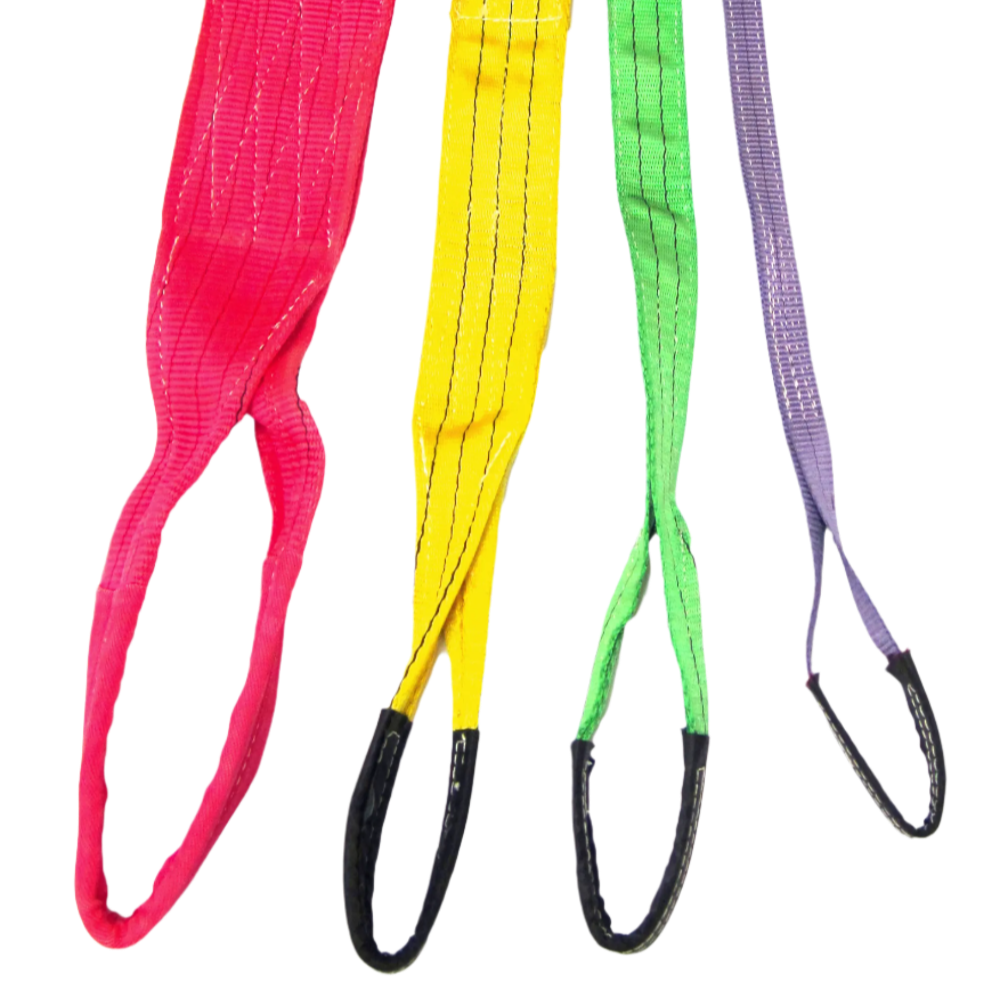
Lifting straps:
• Gentle on all surfaces – but sensitive to sharp edges
• Made of polyester webbing
• All straps are supplied with sewn-in reinforced eyelets
• The color indicates the load
• Resistant to most acids
• Safety factor: 7:1 according to EN 1492-1
• When placing an order, specify the length in meters from bearing point in eye - to bearing point in eye
Load table for round sling and lifting strap

Application and user guide
Application (Excerpt from user manual for round sling and lifting strap – 3.02.04-D):
1. Always prepare the promise carefully.
2. Check the load label to ensure the WLL and length are correct.
3. Examine the straps for possible error before commissioning. Never use a damaged or defective strap.
4. Never overload!
5. Check that the load is centered on the strap.
6. Use identical straps for multipart lifts.
7. Never tie knots on the straps to shorten or lengthen them.
8. Never lift when the straps are twisted or knotted.
9. Keep the stitching of the straps clear of the hook.
10. Protect the straps from sharp edges and abrasion.
11. Avoid shock loading.
12. Do not pull a load by the strap or drag the straps along the ground.
13. Keep the straps away from alkalis (eg ammonia and caustic soda).
14. Do not use the straps at temperatures below -40°C and above 100°C.
15. Inspect the straps after use and take them out of service if there is visible damage.
16. Before first use, the date and year of use must be indicated on the load label (if necessary, use a pair of pliers).
Information on frozen rolls according to EN 1492-2:
Rundsling are suitable for use and storage in the following temperature ranges:
a) polyester and polyamide: -40°C to 100°C,
b) polypropylene: -40°C to 80°C.
At low temperatures and humidity at the same time, ice will form, which can act as a cutting and grinding agent, causing internal damage to the round loop. In addition, the ice will reduce the flexibility of the round sling and in extreme cases make it useless. The specified temperature ranges change in chemical environments, in which cases advice should be sought from the manufacturer or supplier. Limited ambient heating within these temperature ranges is acceptable for drying. Fyns Kran Udstyr recommends that frozen round slings are not used, as the ice breaks into pieces and forms sharp edges, which can cause internal damage.
NOTE before use:
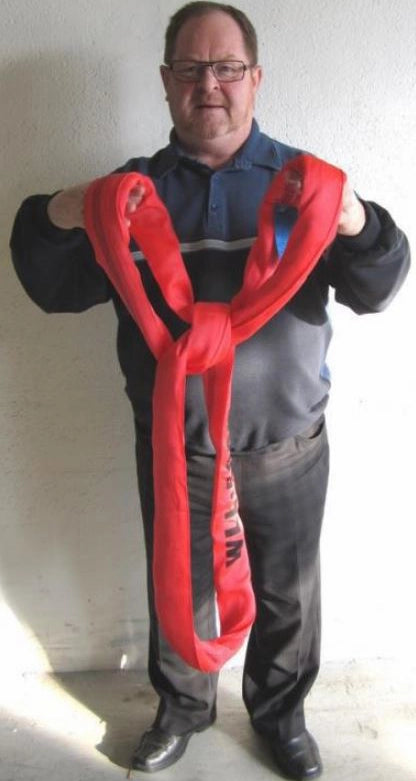
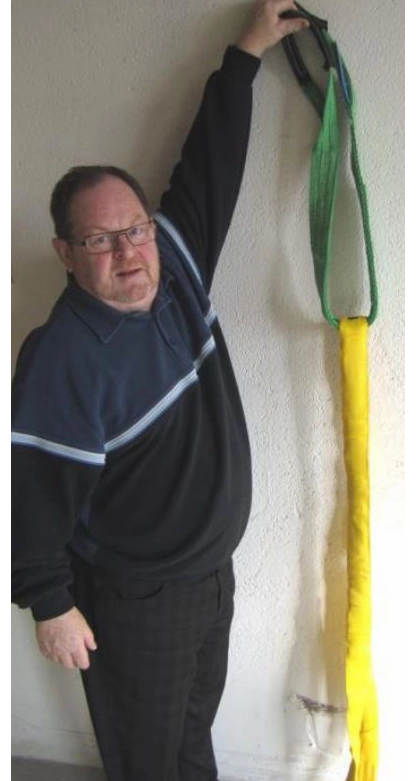
Back knot reduce WLL by min. 50%
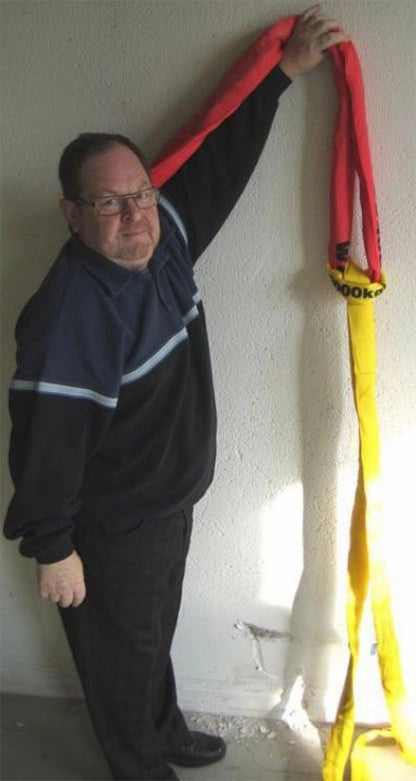
Extension node reduce WLL by min. 50% Use round sling/band shackles instead
Combination - round sling/lifting strap can reduce the WLL of the lifting strap by 50%. Use round sling/band shackles instead
Recommended systems for polyester rounding (safety factor 7:1)
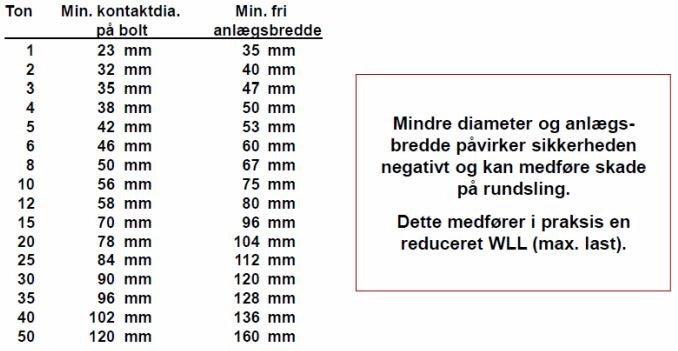
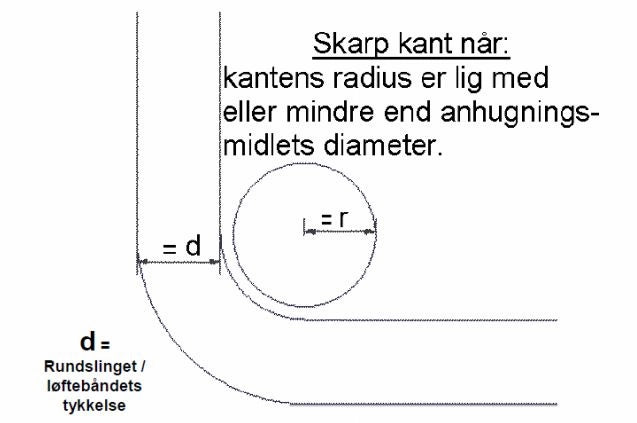
When is an edge too sharp to use polyester round sling/lifting strap?
Examples of sharp edges and incorrect use:

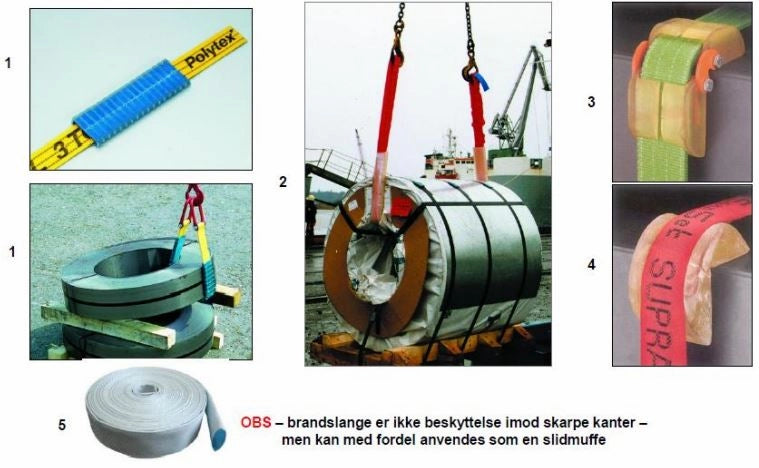
Examples of protection against sharp edges:
Examples of heavy lift straps made of Dyneema fibers:
TLX - Round sling 10 ton – 150 ton with one-layer wear cloth type. Special weave structure makes the tablecloth particularly strong against wear compared to standard polyester tablecloth. 3 – 4% extension at WLL. Delivered according to . MD 2006/42/EC / Produced in accordance with EN1492-2
DYNEEMA round sling for HEAVY LIFT from 15 – 180 tons, type ULTRALIFT. Own weight approx. 2.5 times lower than traditional polyester round sling. Own weight approx. 10 times lighter than steel wire. Can be supplied with DYNEEMA cloth and EX cloth. Extremely strong wear cloth against wear. Minimal elongation (0.5%). Delivered according to MD 2006/42/EC / Produced in accordance with EN1492-2
DYNEEMA coilsling for lifting / handling steel coils and heavy and sharp objects. From 10 to 30 tons. Covered with DYNEEMA protective cloth, extremely strong against sharp edges and abrasion. Indicator in case of wear - red thread. In case of damage, protection can be replaced. Long service life due to DYNEEMA protective cloth. Low net weight compared to chain and steel wire. Delivered according to MD 2006/42/EC / Produced in accordance with EN1492-2.
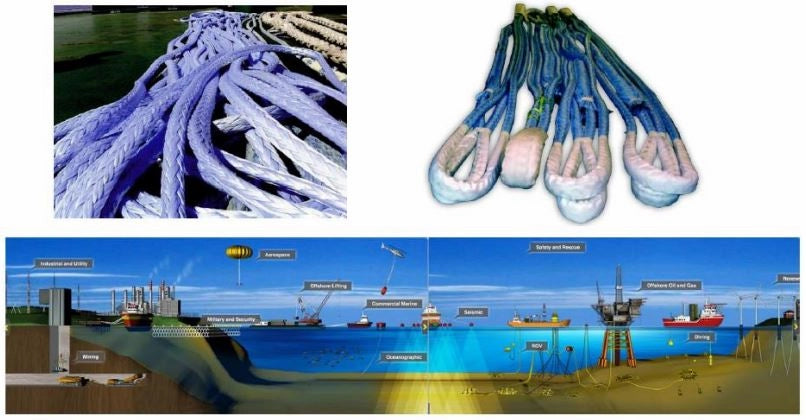
Disposal of round sling and lifting strap
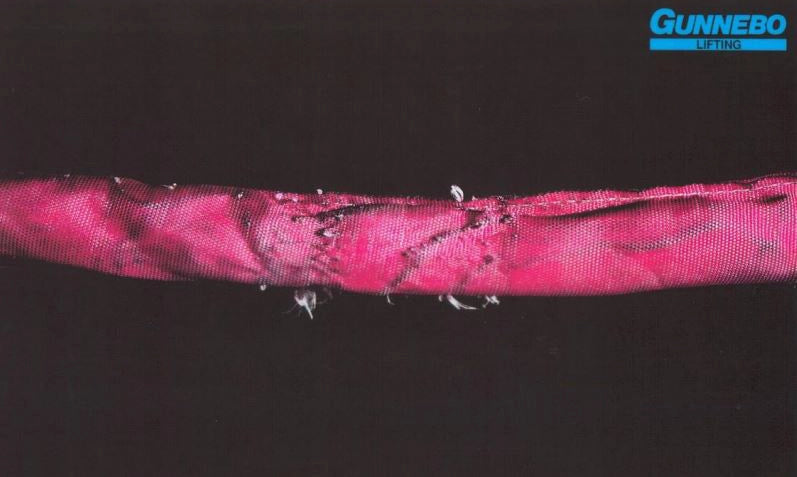
A round sling must be discarded when:
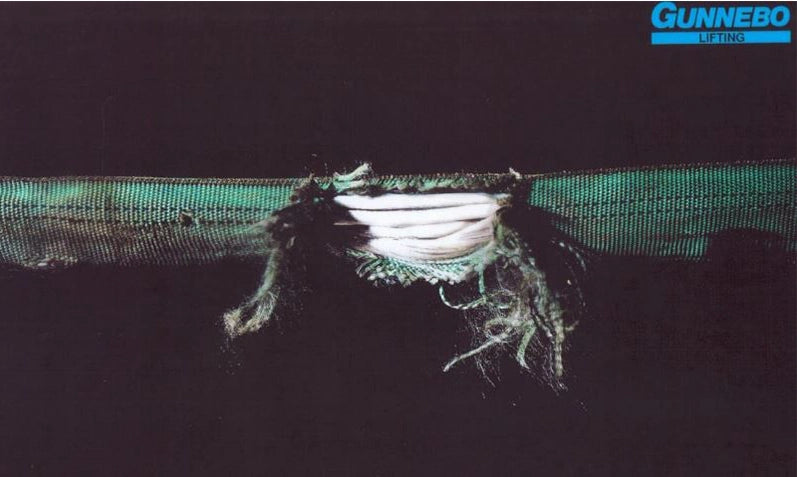
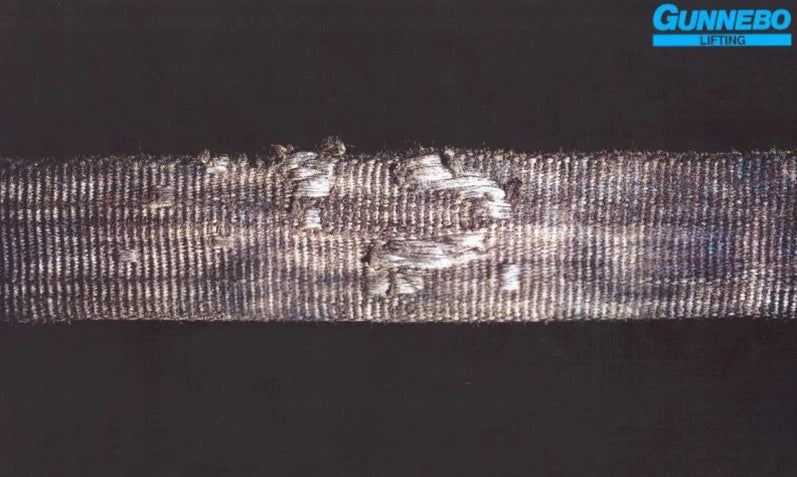
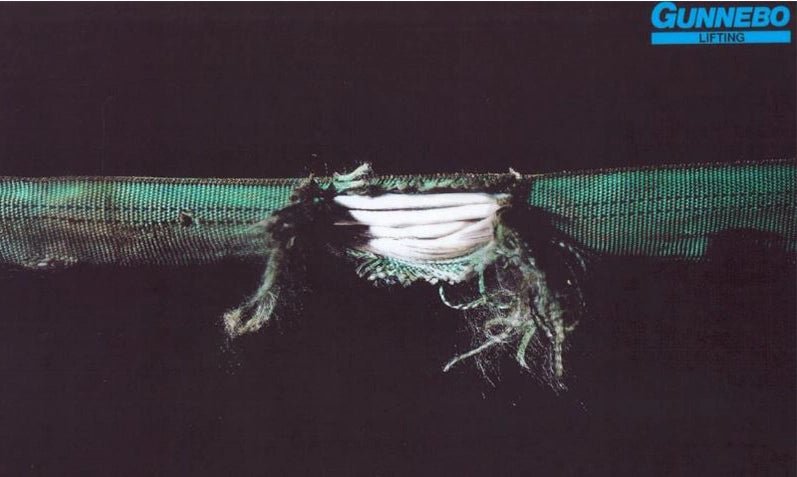
- there is damage to the protective cloth, which means that the load-bearing fibers may or have been damaged.
- if possible stitching in the round loop has opened (can be repaired if necessary).
- if the color code or WLL marking has disappeared.
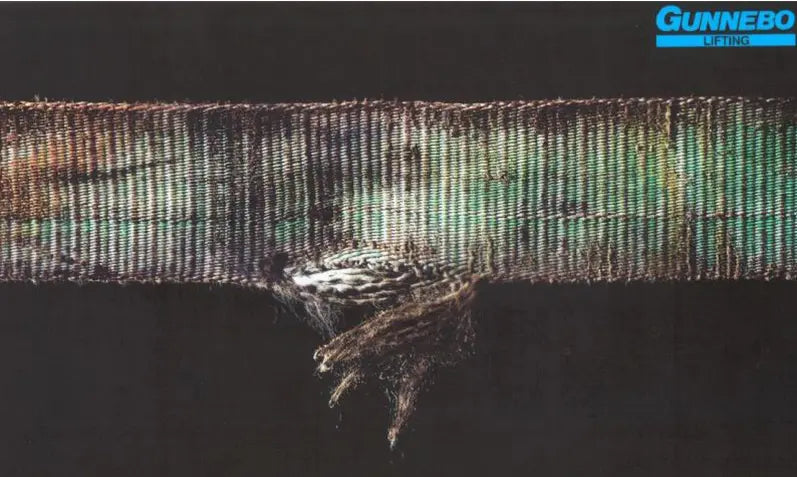
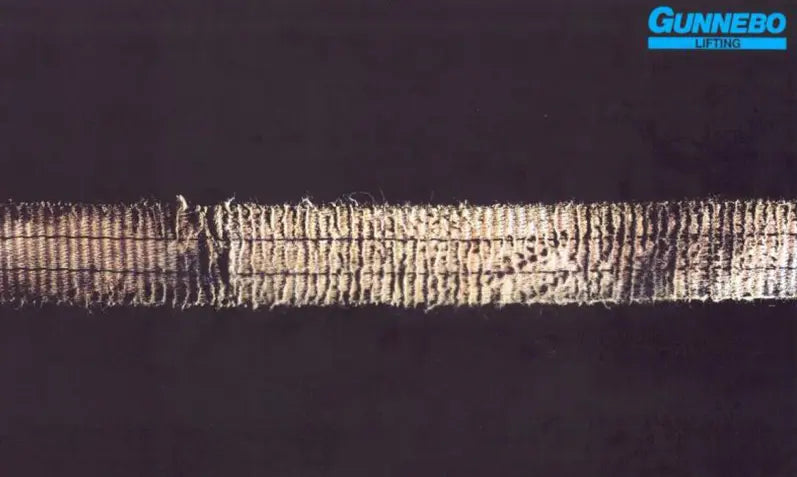
Lifting straps must be discarded when:
- there has been a cut through the edge of the weave, so that the load-bearing fibers have been cut
- they have been exposed to alkaline agents, strong heat and melting damage.
- you can no longer read WLL on the label.
Examples of disposable round slings and lifting straps

Storage and maintenance
Maintenance (Excerpt from user manual for round sling and lifting strap – 3.02.04-D):
The lifting gear must be checked at least every 12 months or according to legal regulations, directives, working conditions and previous experience.
1. Store the straps in a dry place.
2. The straps can be cleaned by washing in a petroleum-based solution and rinsing in water.
3. Examine the straps thoroughly both before and after use.
4. Check that the labeling is undamaged.
5. Discard damaged straps or contact Fyns Kran Equipment for advice.
6. Repairs may only be carried out by the manufacturer.
Maintenance in a nutshell
- Store the straps in a dry environment
- The straps are washed in clean water and hung to dry with good ventilation
- If the straps are frozen solid, they must be thawed before use
- When used in salt water (often boat lifting) - they should be regularly rinsed in fresh water as dried salt can wear out the fibers
- Remember that the sun's UV rays break down the polyester fibers over time.
