

Trolleys - Guide for use and nine important rules when lifting
A trolley is specially produced for installation on beams. The trolley can, for example, be used to hang electrically powered, hand or compressed air powered lifting devices. Trolleys are available in different sizes and can be adapted to the size of the beam.
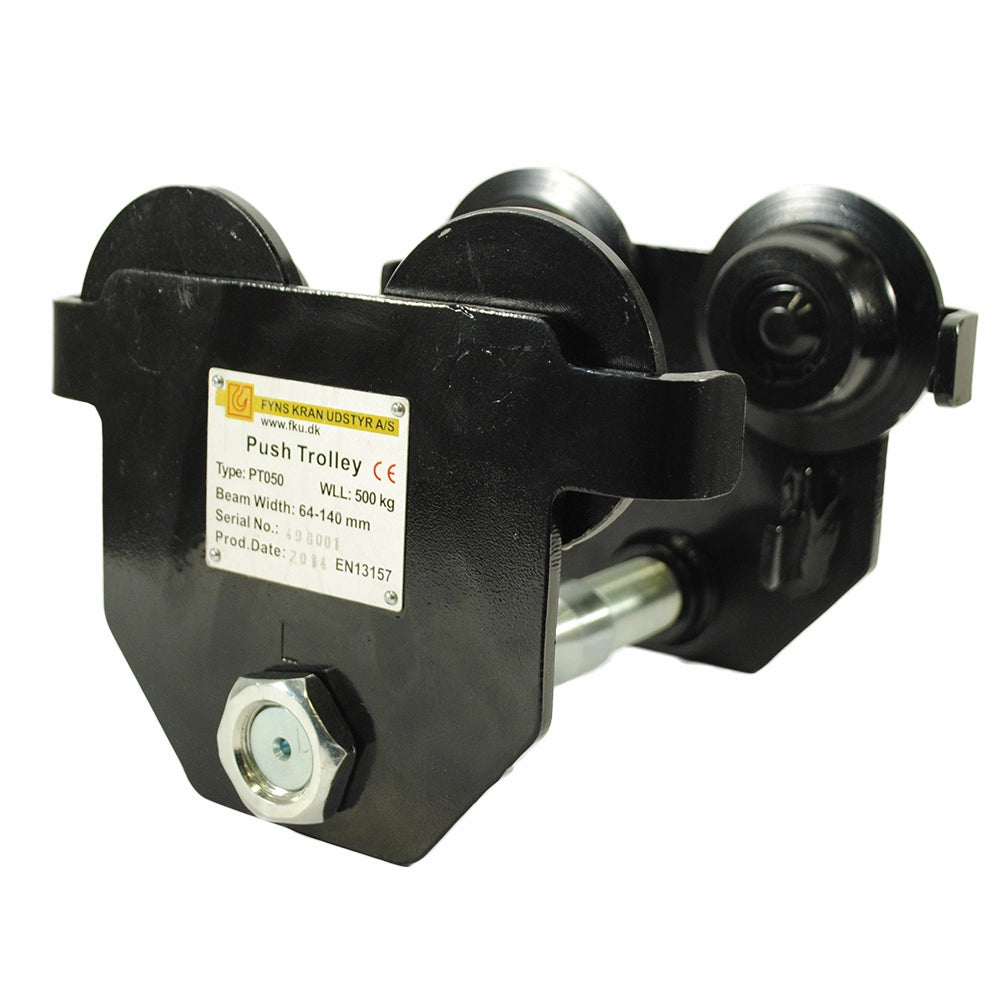
The harvester must be made familiar with the instructions for use and:
– Ensure that the weight of the load corresponds to the capacity of the beam and the trolley.
– Ensure that the span of the trolley matches the width of the beam.
– Do not expose the trolley to extreme temperatures.
– Trolleys can be used at – 10˚C to +50˚C
- Before tying down, the weight of the load must be determined and any special instructions in relation to handling the load must be taken into account.
It must always be ensured that the load is loose and not bolted or otherwise secured.
Before use
Before using your trolley, ensure that:
– The trolley is free of deformations, wear, damage, twists, cracks or other defects that could constitute a risk factor.
– That the wheel, axle and bearings are intact and undamaged.
– That the lifting capacity and span are clearly marked on the trolley.
– That the trolley is correctly marked with manufacturer, CE, WLL, date and identification number
If visible damage or defects are observed on the running cat, it must not be used.
When lifting
If the design of the beam does not allow the trolley to be mounted from the end, the following procedure must be followed:
1. Hold the trolley under the beam and make sure that the space between the trolley wheels is large enough for the trolley's wheels to be placed on the beam.
2. Place two wheels on one side of the beam so that they come into contact with the lower part of the profile.
3. Adjust the distance between the wheels.
4. When the width of the trolley is adapted to the beam, the shaft is locked with the enclosed lock nuts.
5. Secure the hoisting unit or load in such a way that the lifting gear (e.g. hoist or hook) is located in the center of the suspension bolt.
6. Ensure that the trolley is securely mounted before carefully commencing lifting.
7. Wih hand power, the load can now be pulled/pushed so that it travels along the beam.
8. Lower the load when it reaches its destination until the trolley is fully unloaded. This is verified by the slack in the hoist chain and free movement of the hook around the suspension bolt on the trolley.
9. If a trolley is installed in the same place over a longer period, it must be checked at regular intervals that it is still securely attached.
The lifting capacity of the trolley is reduced when lifting at an angle. It is therefore recommended that you only lift in a straight lift under the trolley.
