More about overhead cranes:
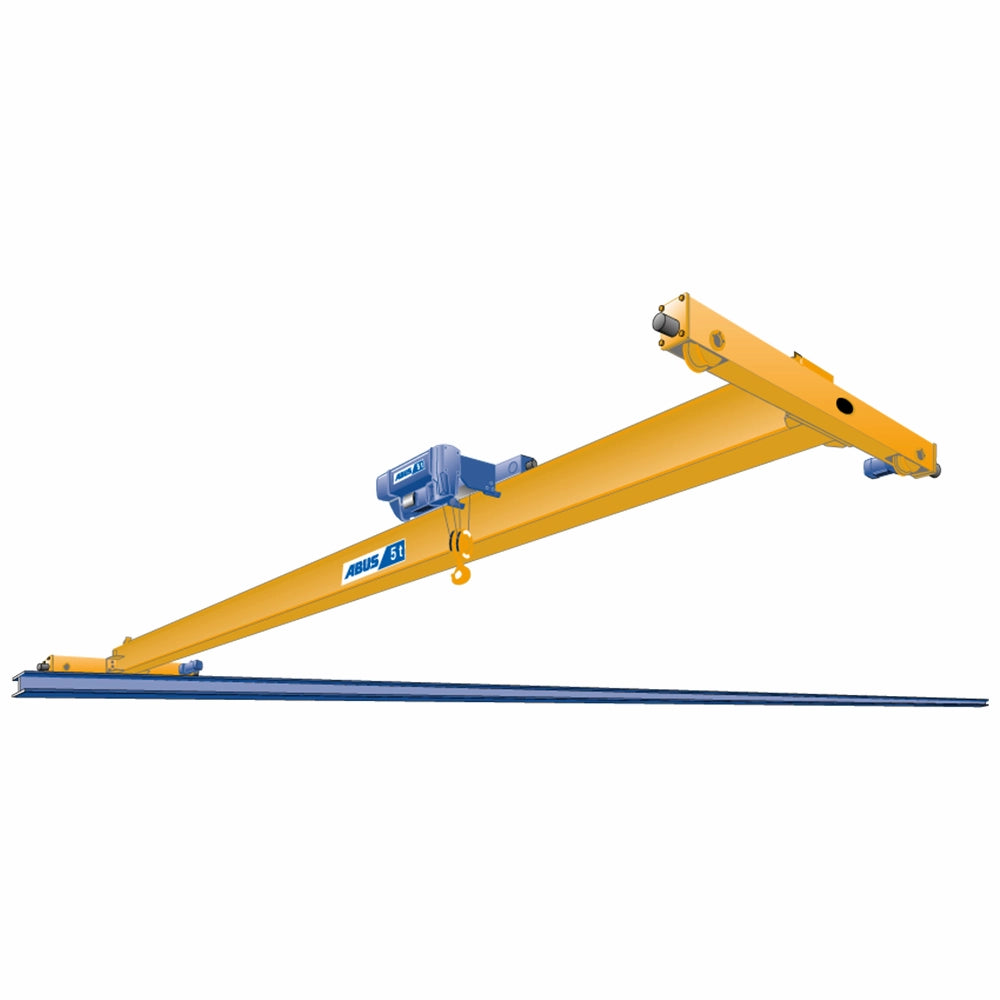
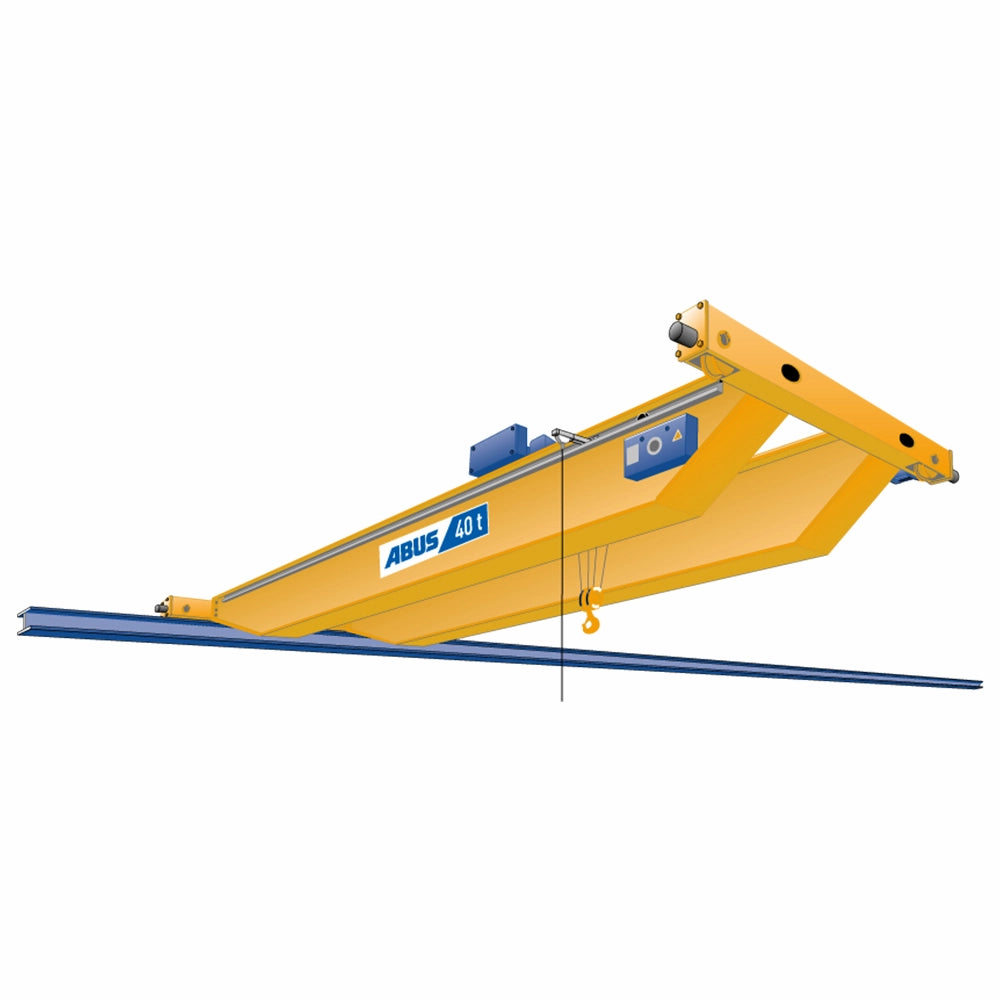
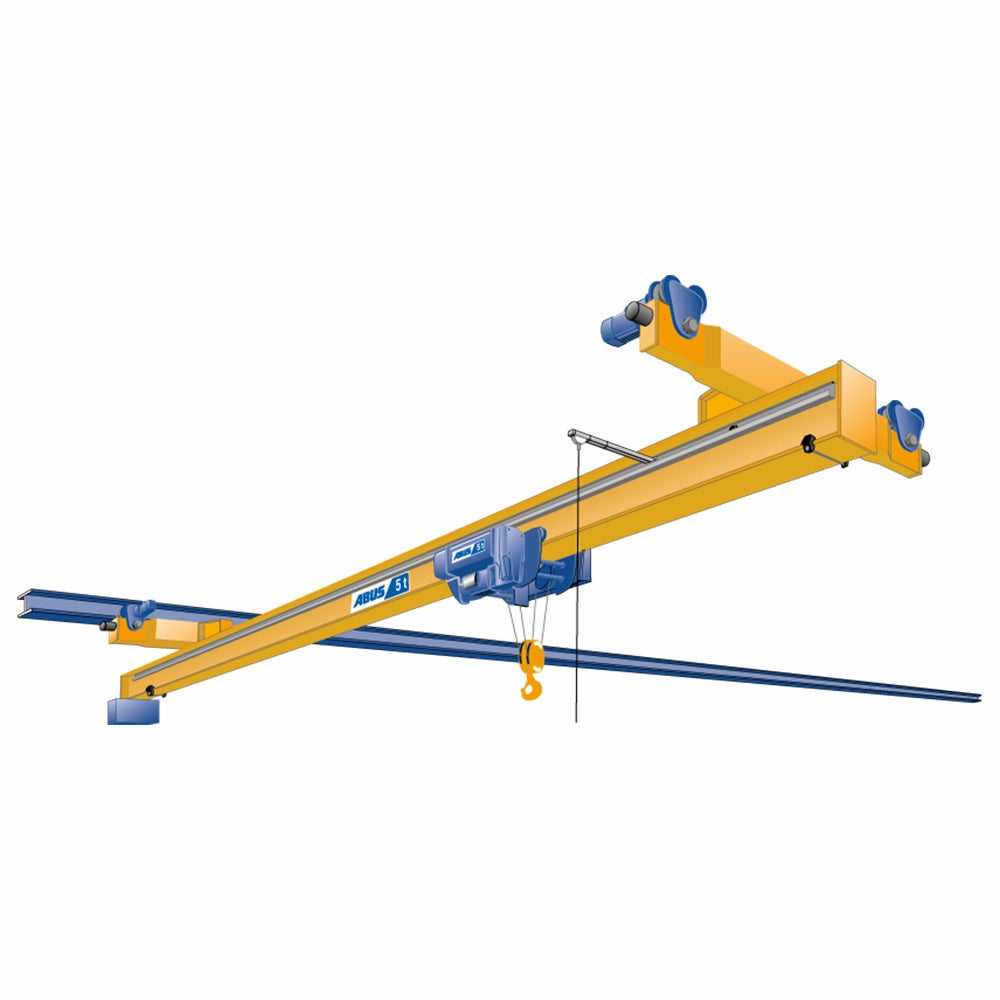
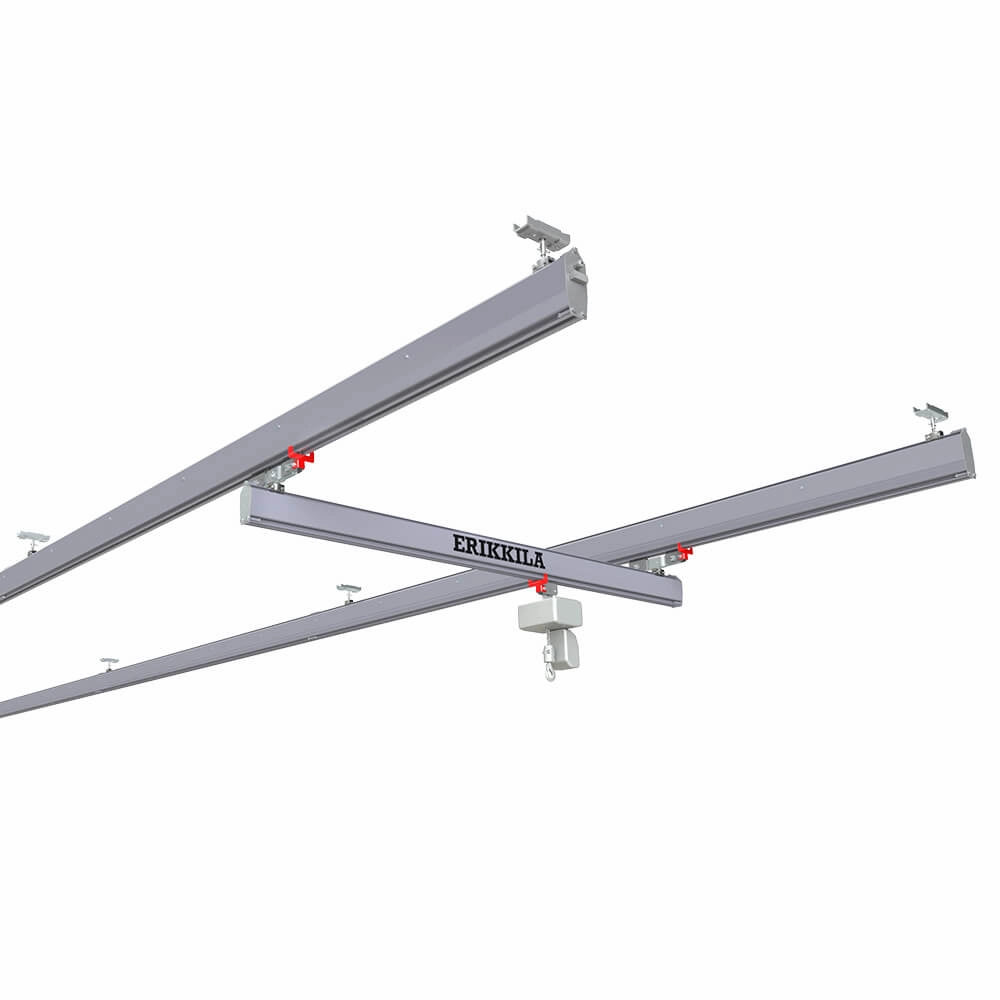
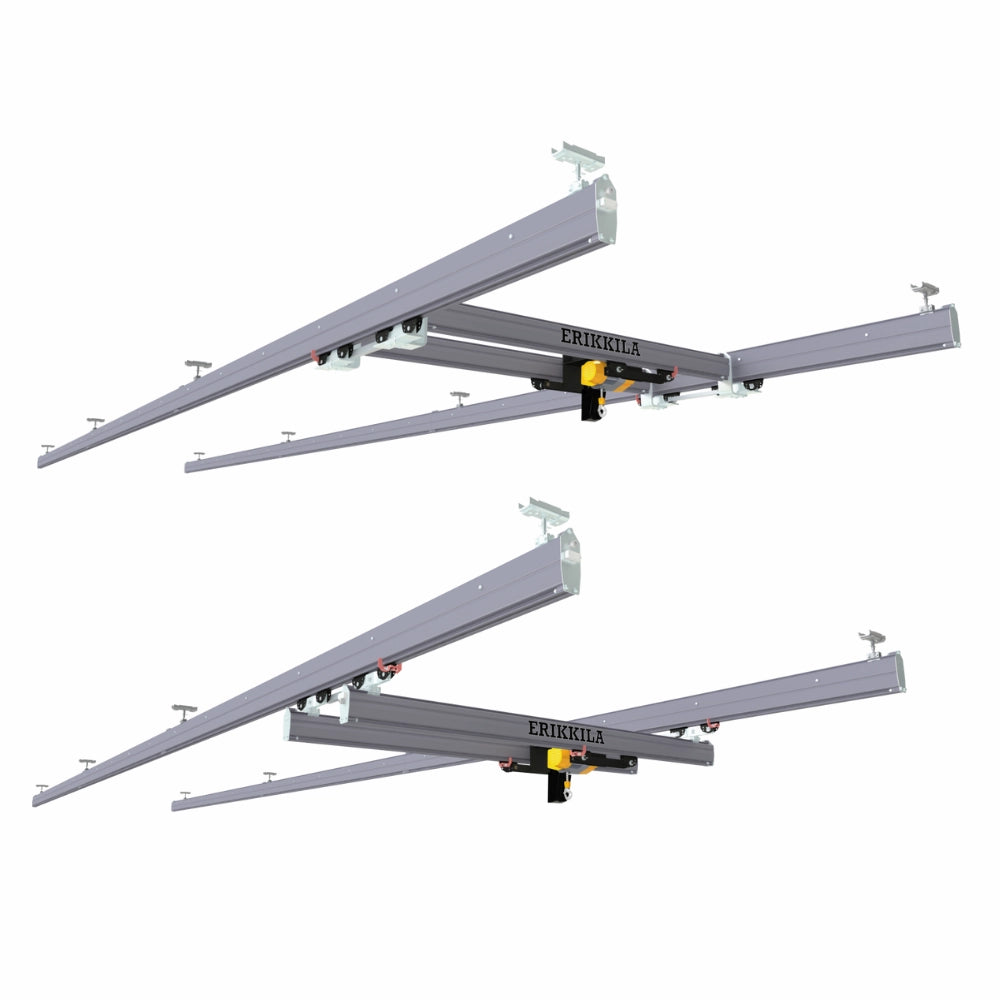
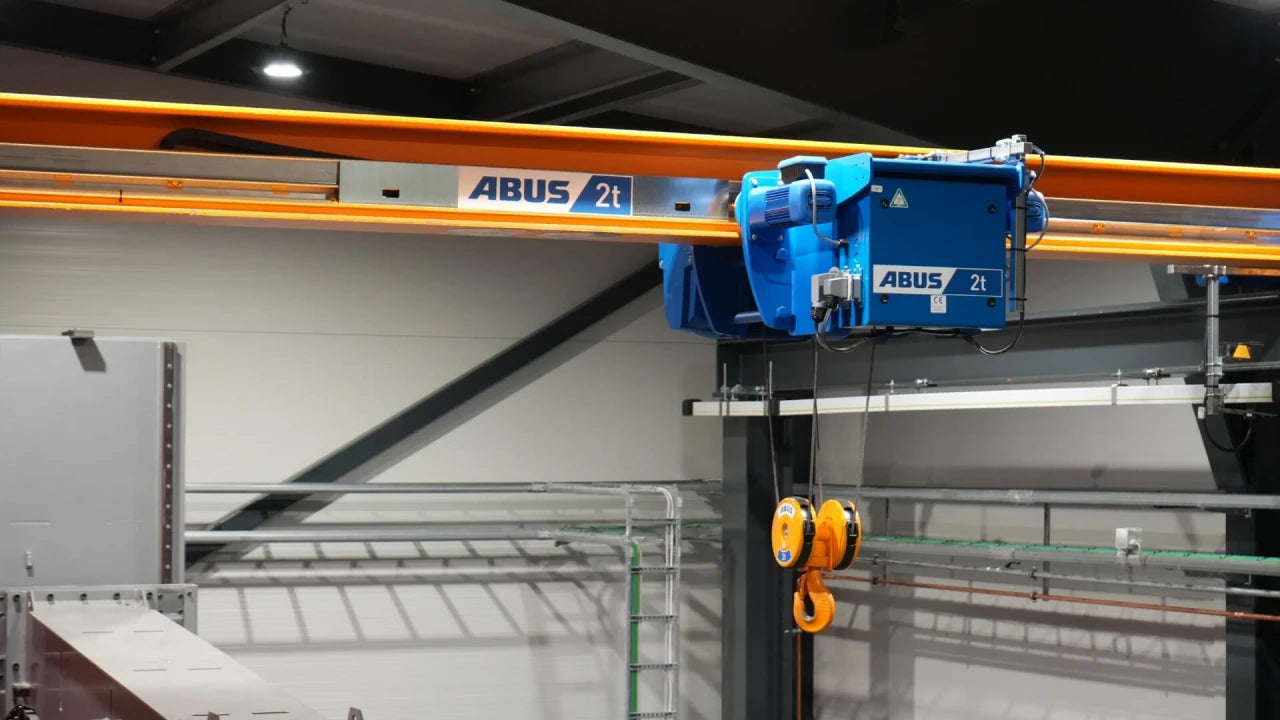
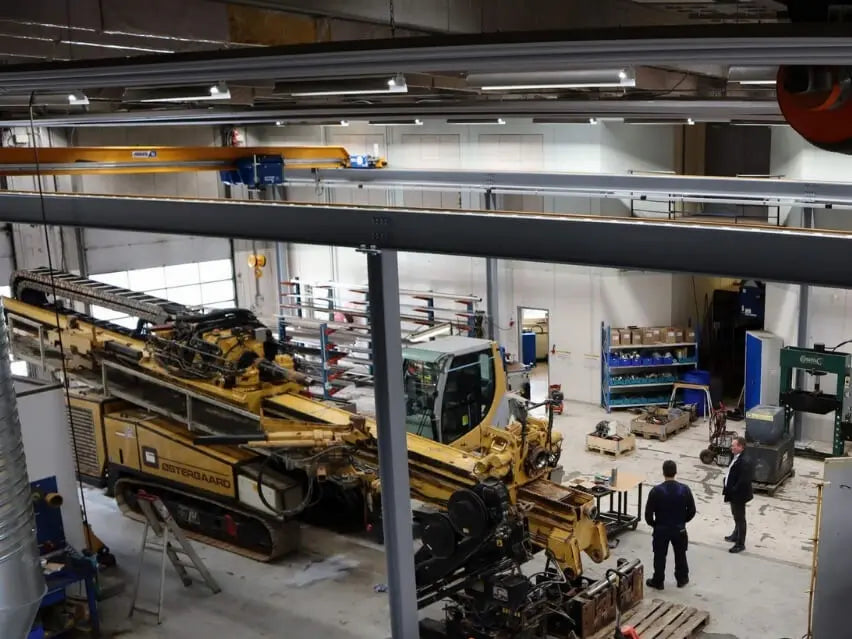
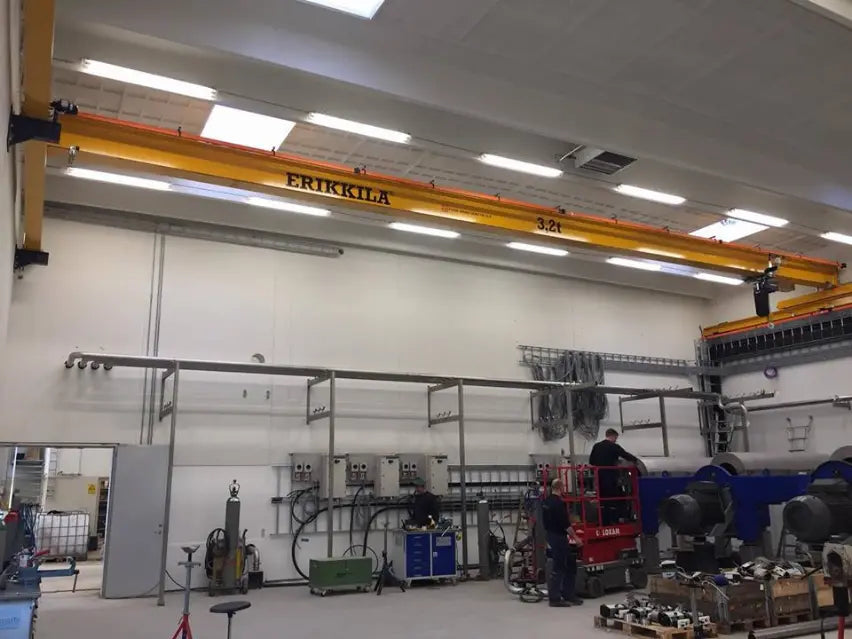
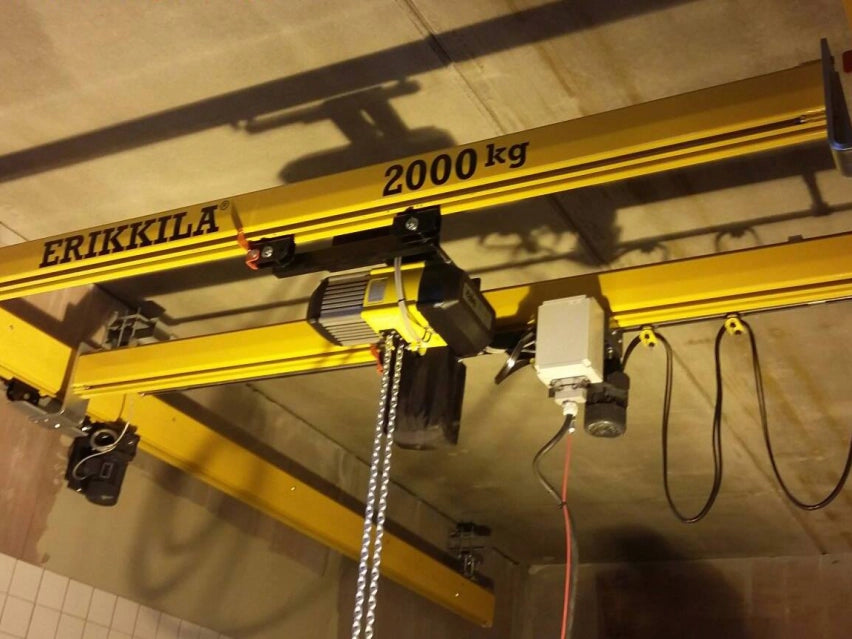
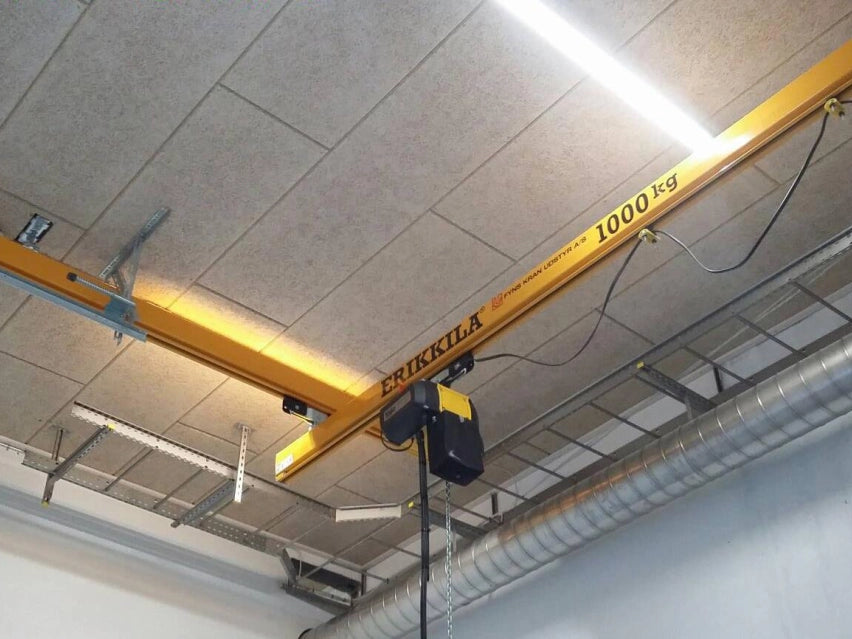
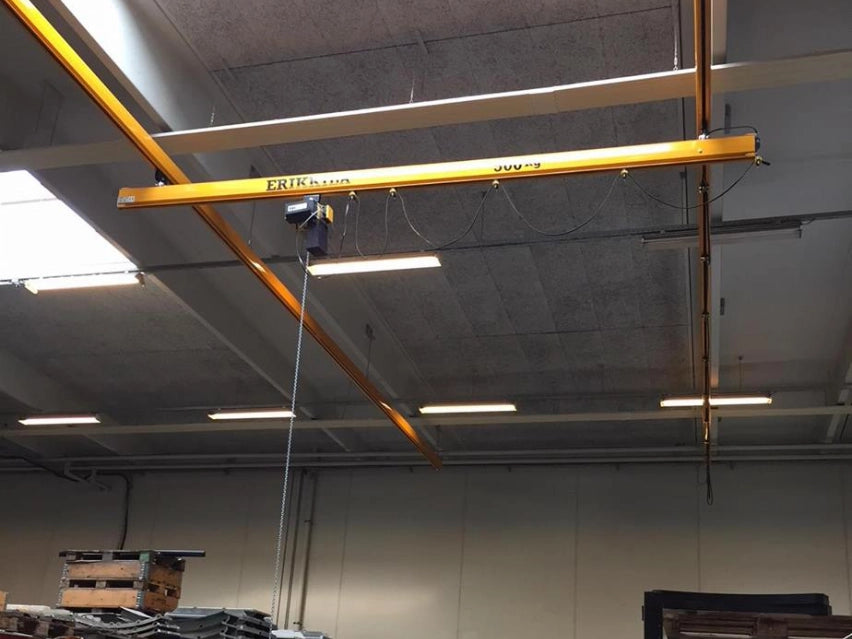
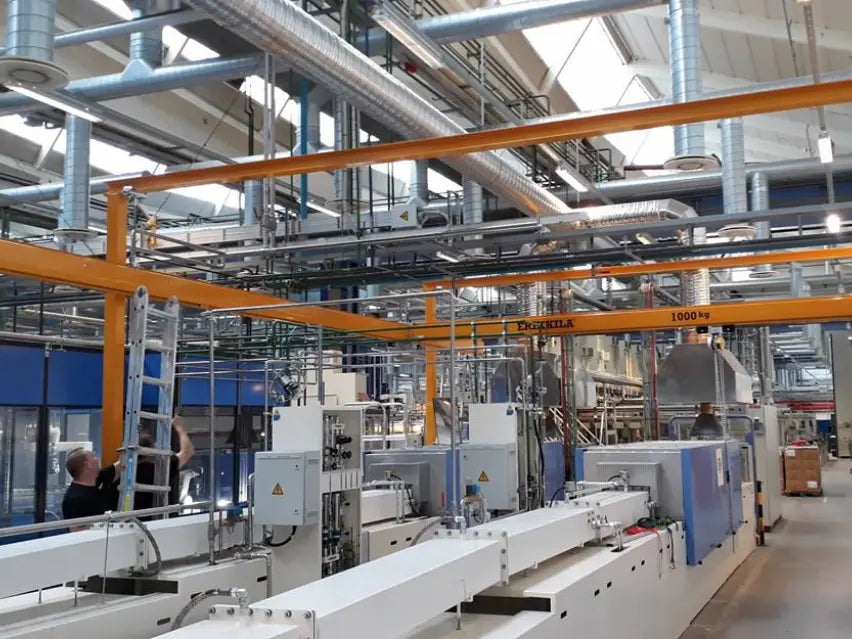
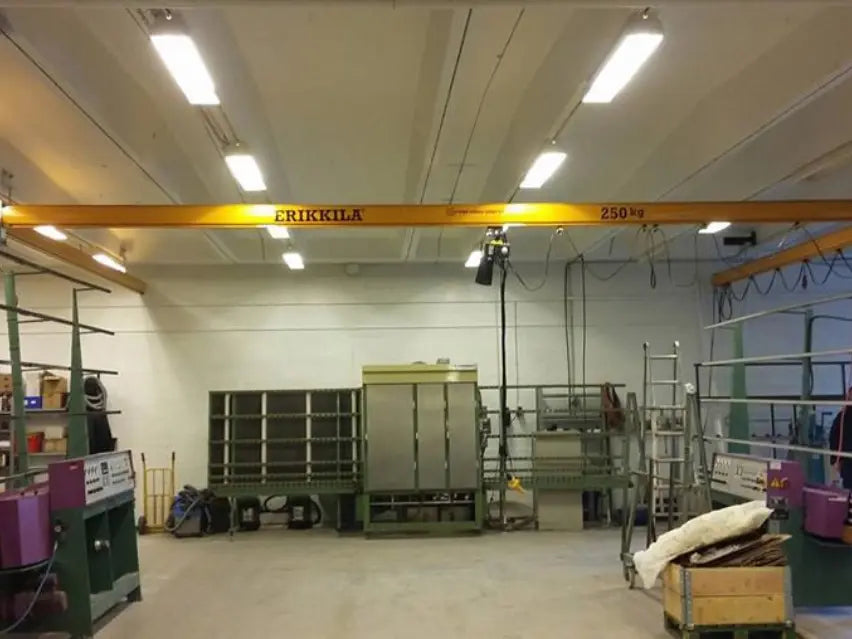
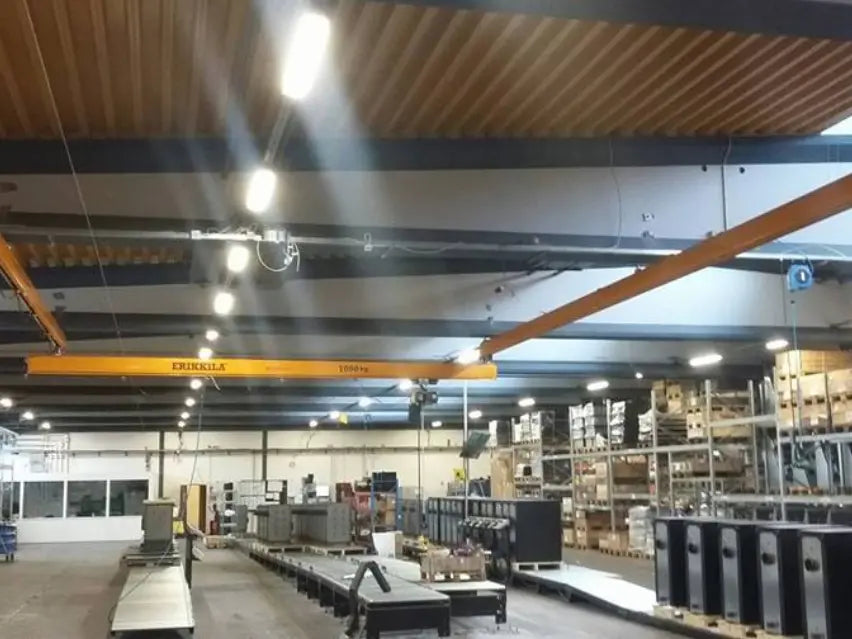
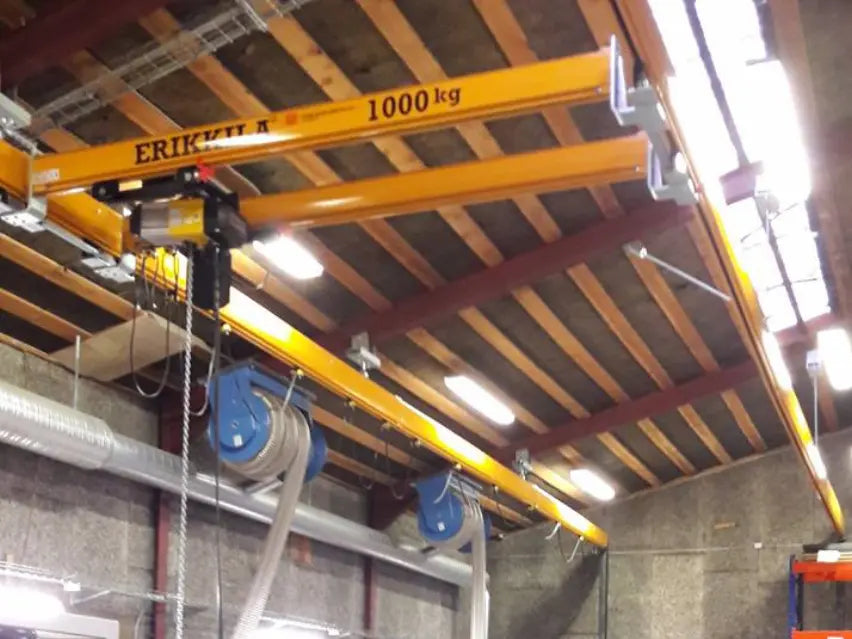
An overhead crane is a type designation for a crane with longitudinal runways and a transverse girder. The girder is often a specially designed steel beam or profile. Overhead cranes are typically used in production or similar environments where heavy loads need to be lifted and a large area needs to be covered.
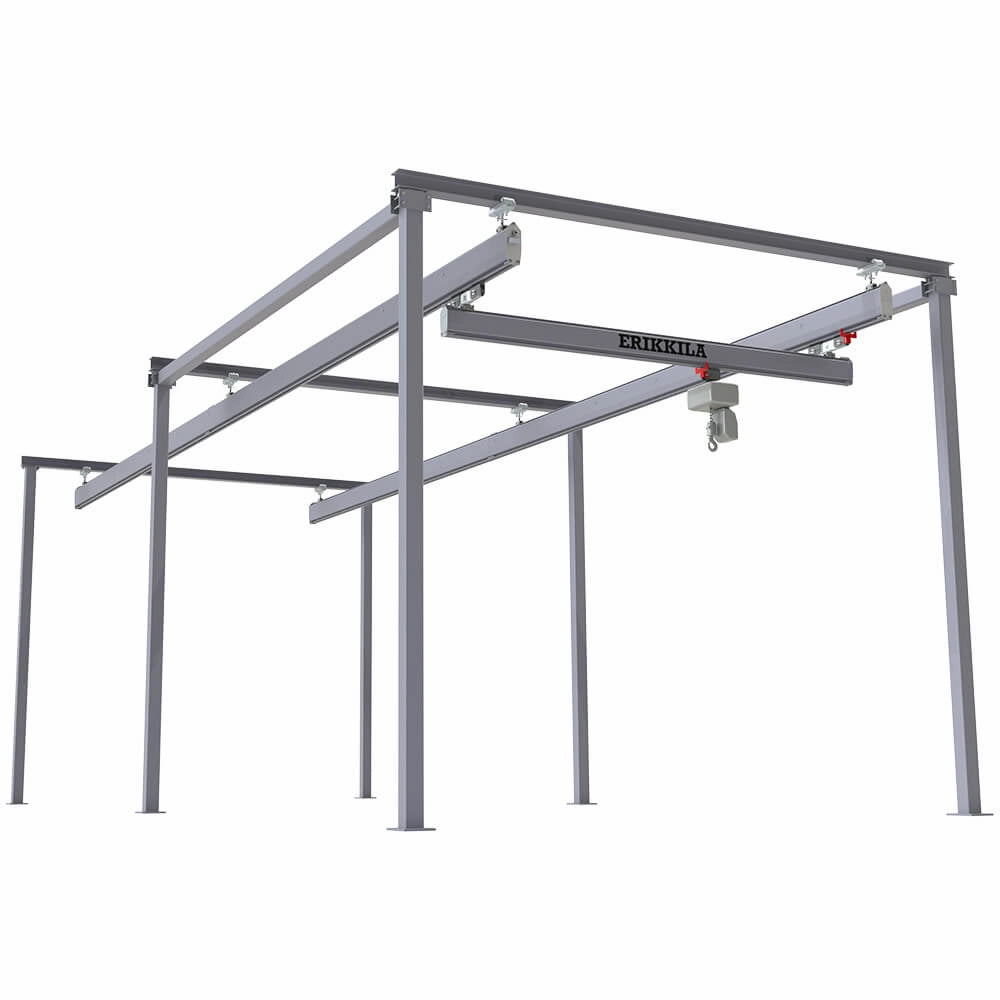
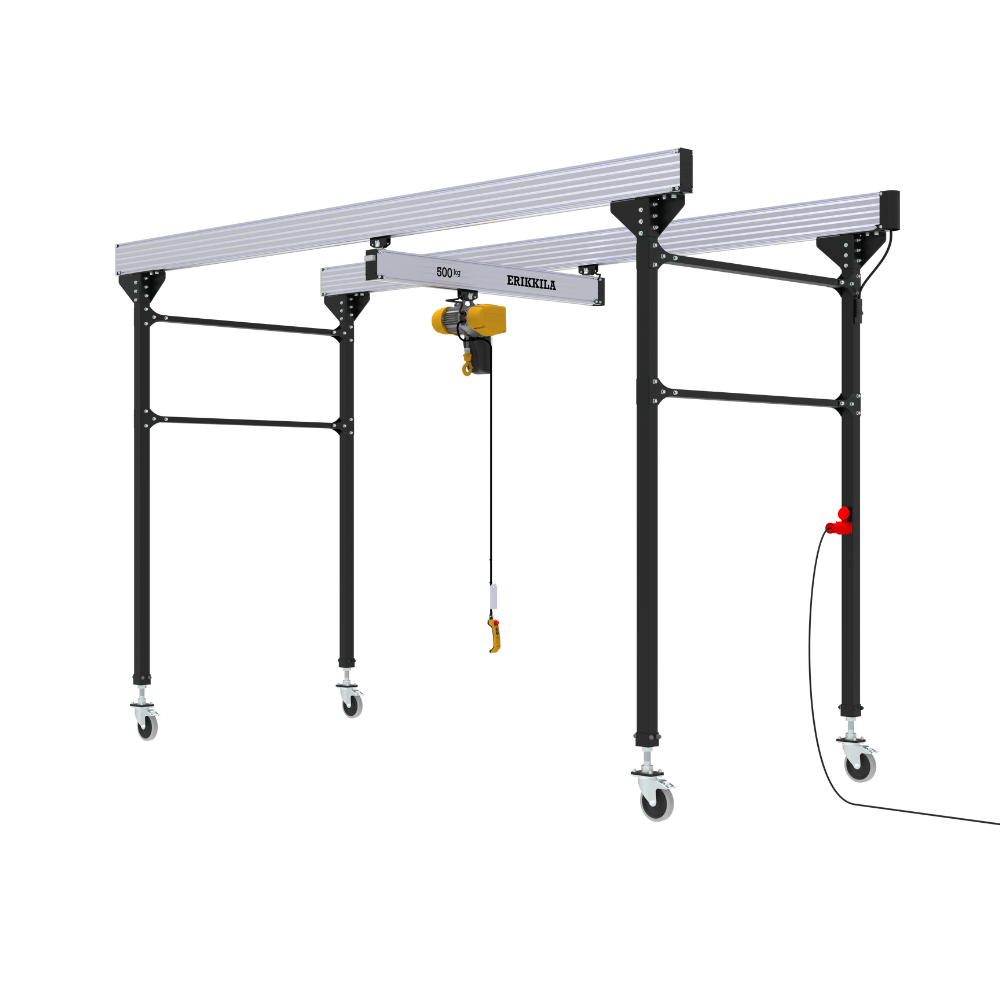
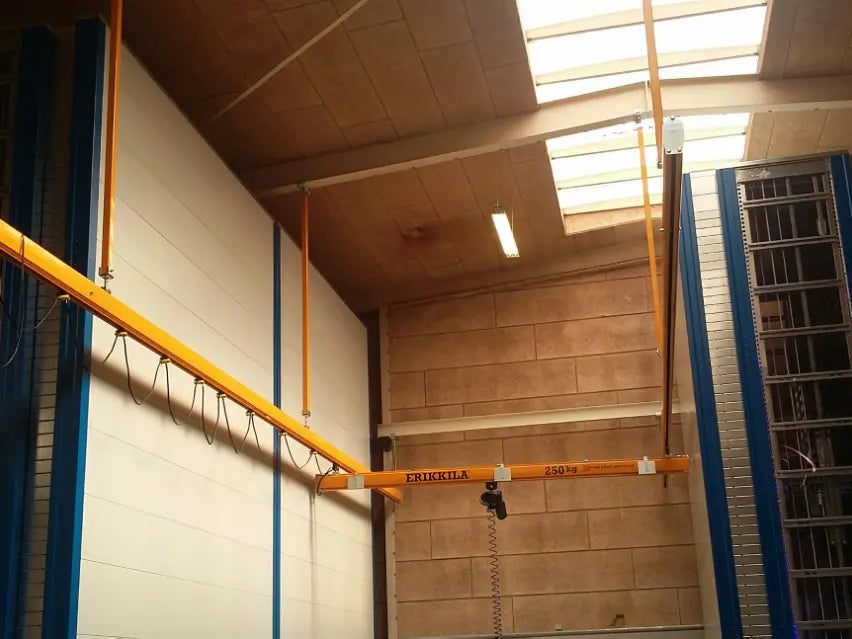
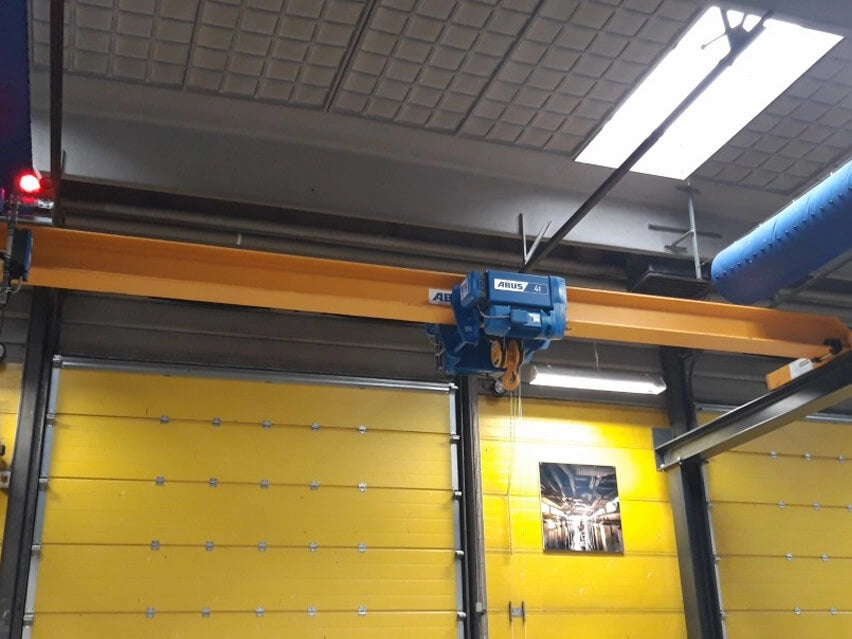
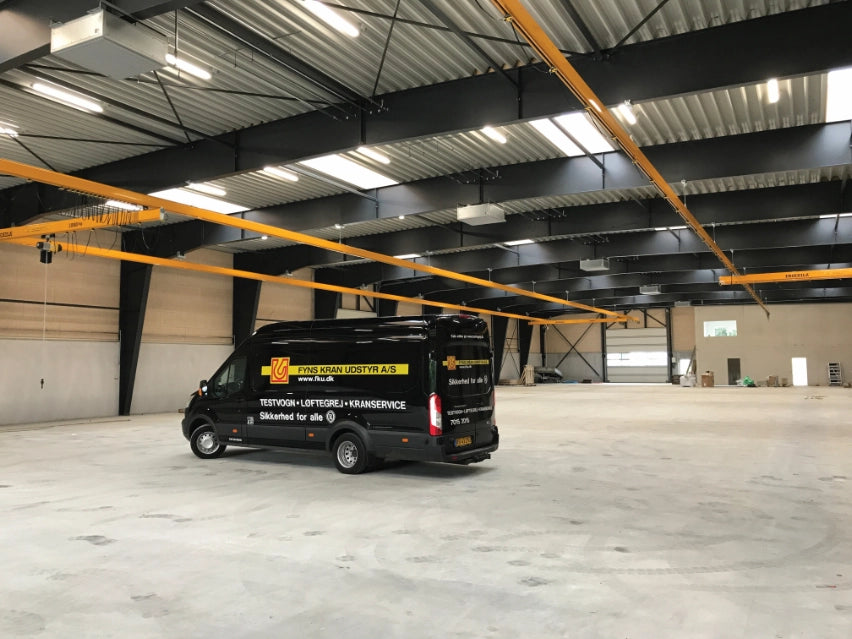
Overhead cranes are used to move the selected load around within the area covered by the crane. They are often installed in the roof structure of the building. In addition, many buildings are built with columns that have space for the overhead crane's runways. If the intended building is not designed to withstand the forces of the overhead crane, it is also possible to install it on independent free-standing columns, which are also shown in the pictures on this page.
WHICH OVERHEAD CRANE SHOULD I CHOOSE?
Investing in one or more overhead cranes can of course seem a little overwhelming, but we have advised customers in the same situation many times before. If you contact us, we are ready to help you over the phone, but we will of course also visit you and provide guidance based on the location where the overhead crane or cranes are to be installed – here we can also answer any questions you may have regarding space and surroundings. When you finally decide that an overhead crane is the right solution, we will of course come out and take a final measurement so that it fits its future location exactly. There may also be cases where the site has not yet been built or similar, and in such cases we can easily use drawings of the future building and offer a solution based on these.
WHAT ARE THE ADVANTAGES OF OVERHEAD CRANES?
Unlike, for example, pillar jib cranes or wall-mounted jib cranes, overhead cranes usually do not take up space in production. In addition, overhead cranes offer incredibly good coverage of the area in which they are installed.
IS AN OVERHEAD CRANE EASY TO USE?
Absolutely – overhead cranes are operated in different ways depending on the type. The smaller solutions, also known as 'light overhead cranes' or 'push-type overhead cranes', are moved manually by the user in the longitudinal direction. This is because the transverse girder is suspended from special low-friction trolleys that often run inside the profile – which is why the girders can be pushed manually even when the overhead crane is fully loaded. These solutions are often fitted with an electric hoist with a push-button pendant from which the lifting height of the hoist is adjusted – these often have two speeds. The larger solutions (often with a lifting capacity of over 2,000 kg) are usually motorised in all directions. Here, control is usually via a radio control that controls all the functions of the overhead crane. This allows you to stand at a safe distance and lift your load. When cranes are equipped with radio control, the functions of the control buttons are usually shown on the underside of the girder so that they can easily be read by the user.
BE AWARE OF THE CERTIFICATE REQUIREMENT
Crane operator certificate requirements generally only apply to cranes with a maximum load OVER 8 tonnes/tonne-metres. However, a crane operator certificate is also required for cranes of up to 8 tonnes when lifting jointly with two or more cranes – you can find out more about the requirements for the user on the Danish Working Environment Authority's website.
DO OVERHEAD CRANES NEED TO BE INSPECTED?
Like all other lifting equipment, overhead cranes must be inspected every 12 months by the supplier or another competent person. If an overhead crane is used outdoors, there is also a requirement for a major inspection when the crane is 10 years from its year of manufacture. This replaces the 12-month inspection for that year. If you have any questions about the inspection of overhead cranes, you are very welcome to contact us. You can also read about why Danish companies choose us for the statutory inspection and what we can offer in terms of crane service.
HOW MUCH DOES AN OVERHEAD CRANE COST?
The price of an overhead crane is very individual. A great many factors come into play, and hardly any two solutions are alike. The price of a specific solution is calculated case by case, as factors such as current steel prices etc. influence the price of the crane. That is why we believe it is crucial that we can give you a price for your new overhead crane as quickly as possible. Among other things, we were the first company on the Danish market to offer an online quote function on our website, where you can use a simple form to get a budget price for your overhead crane sent directly to your inbox. Whether or not you choose to use the form, we are of course also ready with a price for your solution if you contact us by phone or email.
IS THERE A DIFFERENCE BETWEEN AN OVERHEAD CRANE AND A CEILING CRANE?
No, in practice there is no difference. "Ceiling crane" is simply the popular, everyday term for what is technically called an overhead crane. The name makes good sense, as the crane is typically mounted high up under the ceiling of the production hall, where it runs on rails (runways) along the walls of the building. This design frees up valuable floor space and makes it possible to cover almost the entire area with a single crane. Whether you call it an overhead crane or a ceiling crane, we can supply a custom solution that fits the dimensions of your building and your lifting needs precisely.
Didn't find the crane type you were looking for? See our overview of cranes.